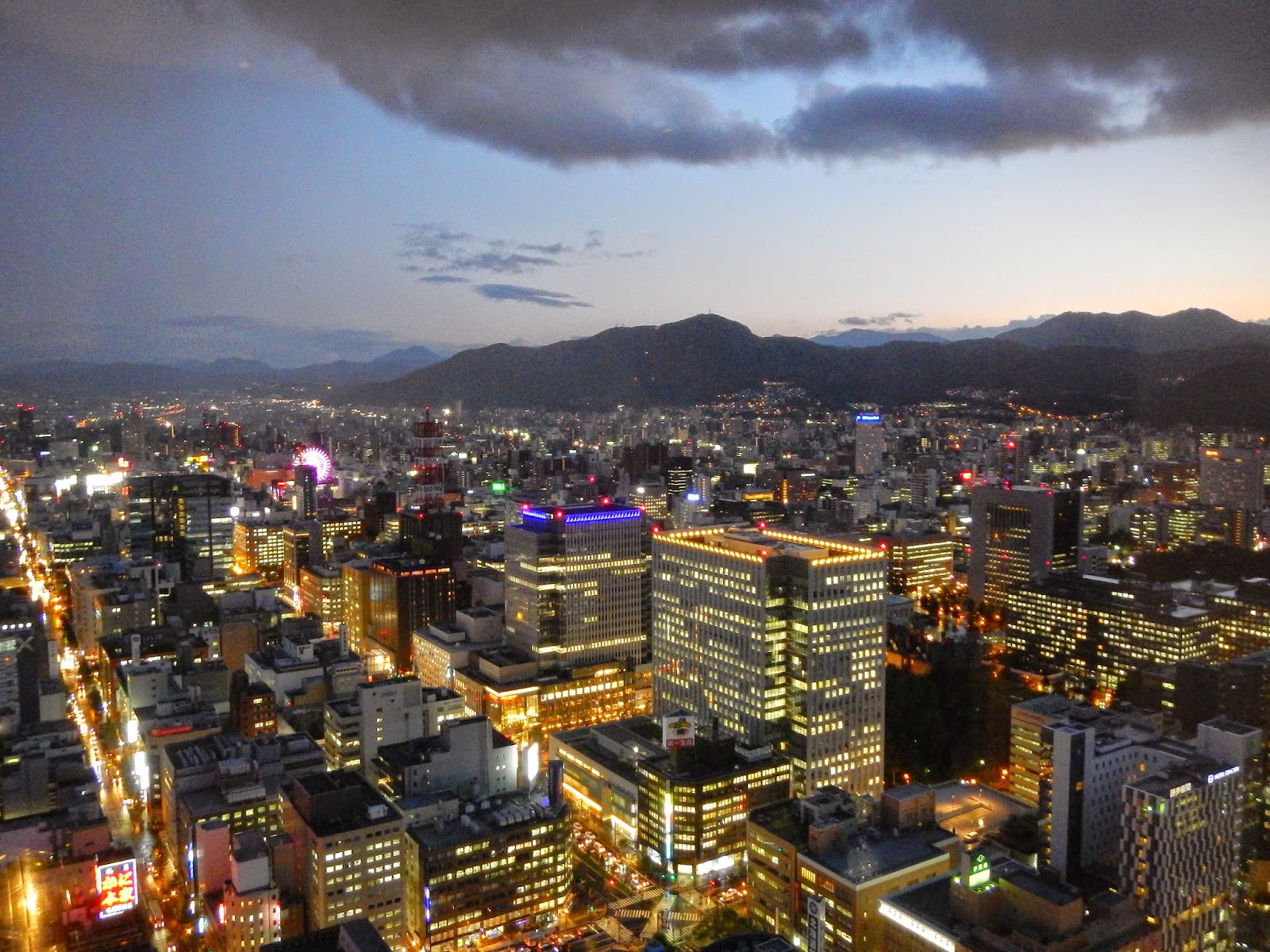
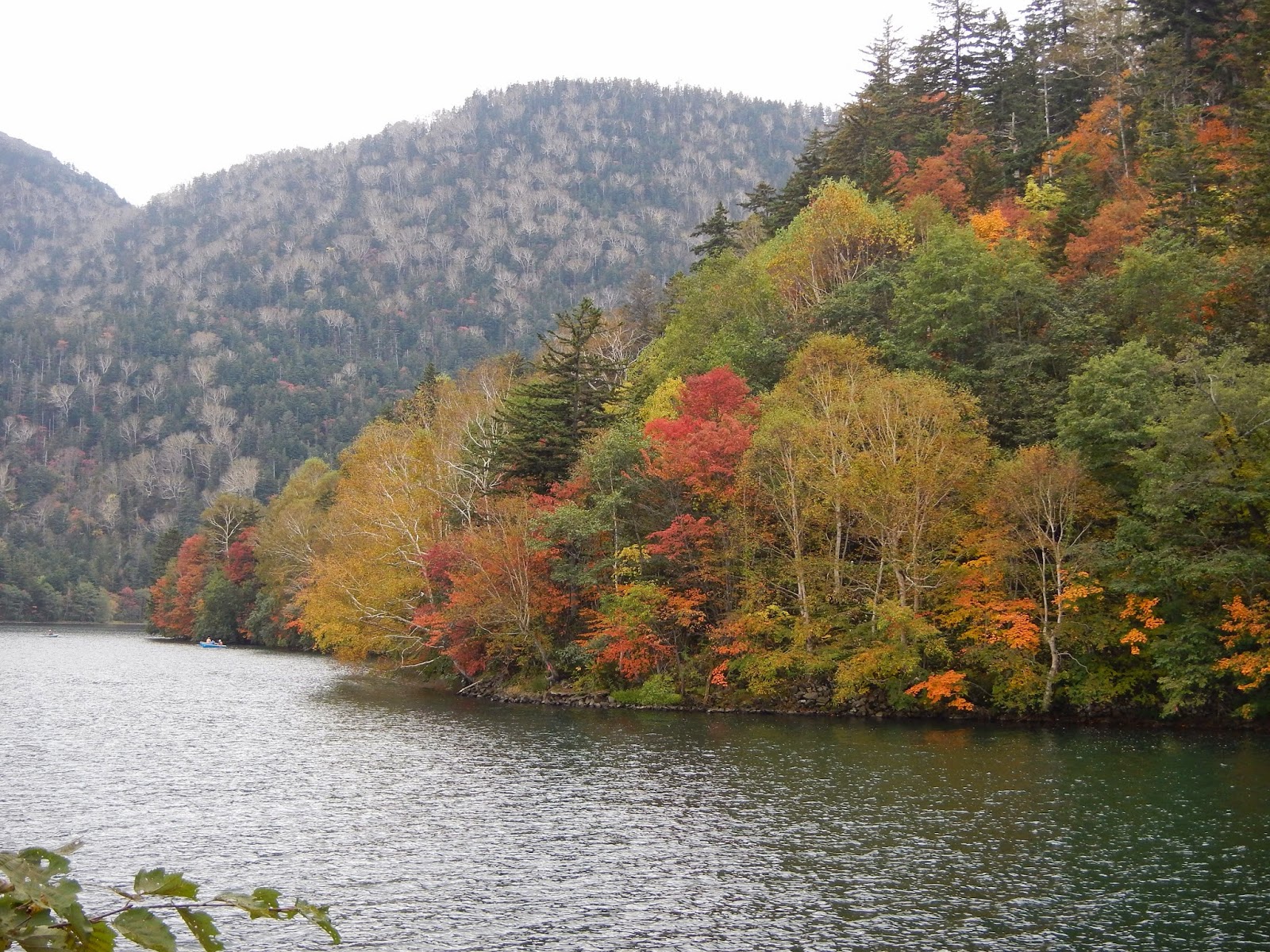
The route of our birding trip in Hokkaido.
To value-add to my conference in Sapporo we booked a guided birding tour through the internet with Takeyoshi Matsuo. He lives on the shore of Lake Furen in a lodge that he built specifically to accommodate birdwatchers. He was born in Honshu, but when we asked why he moved to the far north the reply was simply "to watch birds". He worked at first on a fishing boat out of one of the local ports, in waters that are closely contested between Japan and (at that time) the USSR. At one point the channel between the two jurisdictions is just over 3km wide, and since the Russian side was under-fished, incursions by Japanese boats were common, but risked capture and impoundment by the Russian coastguard. Take-san's boat was taken in just this way and the crew were arrested, with the possible prospect of four years imprisonment. In the event they were released after four days; just as well since their daily food ration was a single slice of black bread and a sugar cube!
We met Take in the port town of Kushiro, after a four hour train ride from Sapporo. I started to count the tunnels we went through on the way, but lost count somewhere in the twenties. The train was not super-fast, but comfortable and scenic. Both the ticket collector and the people with the food trolleys turned and bowed to the carriage on entering and leaving. Like many Japanese, Take was hard to age, but we deduced from his stories that he must be in his late 60s, like us. In his small Suzuki 4WD he drove just like any other birdwatcher, which was a bit nerve-wracking at first, but I figured that he had survived this long (so have I). Our first destination was the huge Kushiro Marsh, a nature reserve which was the last refuge of the iconic Red-crowned Crane in Japan. The Japanese population of this bird was down to around 20 individuals in the 1930s since the majority of the population migrated south and were killed there by hunters. But a tiny non-migratory population was discovered in a corner of Kushiro marsh, and from that remnant the population has now recovered to over 1000. We scanned the vast reed beds anxiously, with memories of the Whooping Cranes at Port Aransas, expecting distant views, but saw nothing. Then as we moved into the neighbouring farmland we saw our first crane family....... probing the manure heap in a farmyard beside the road! So romantic. From then we saw lots of cranes, in farmyards, in the paddocks, even stalking across the road. Wonderful bird.

Just a fraction of Kushiro Marsh.

Getting down to business, Kushiro Marsh.

Our first Red-crowned Cranes. So aesthetic.

But we saw plenty.

Even crossing the road!
We spent the first night at a small ryokan-style hotel at Youroushi where Take said we were guaranteed a sight of the amazing Blakiston's Fish Owl. This sounded a bit over-confident, but we forgot it for a while as we were introduced to the hotel and our minimal, but so stylish, room, the onsen and the outdoor onsen beside the creek. I had just got back from a soak in the bath when there was a knock on the door to say that the owl was outside; and there it was, a huge owl (the world's largest) perched over the little fish pond on the back lawn, less than 20m away, looking for its supper. The hotel used to keep their fresh fish supply in the pond and a pair of local owls found this ready supply of food. The owner realised that the owl as a drawcard far outweighed the loss of fish, and since then both birds have been coming in on a regular basis in the late evening and early morning. We were able to watch the female bird while we ate a memorable meal in the dining room, but sadly the male didn't make his usual morning visit, so no photograph for me.

Youroushi ryokan room.
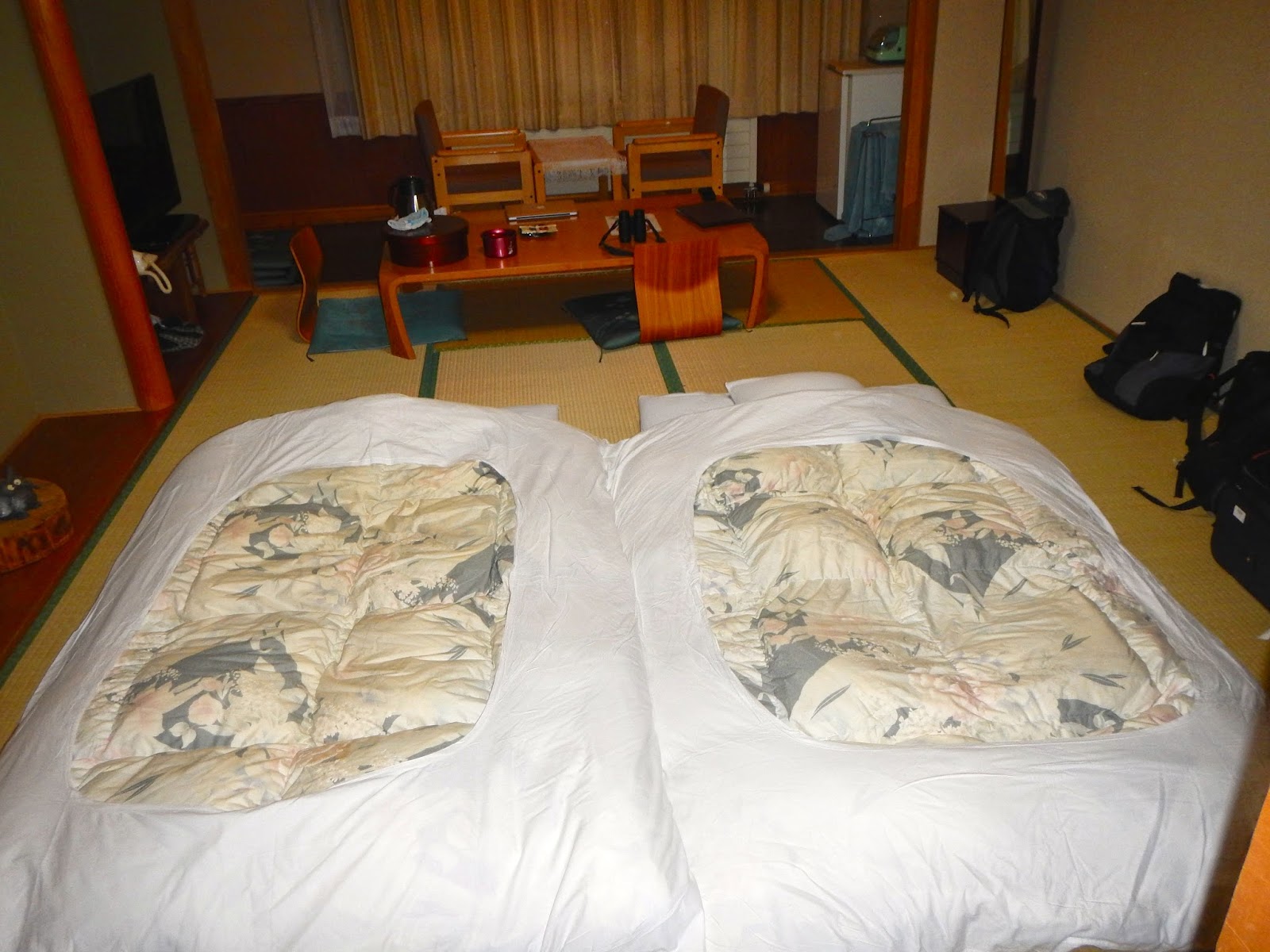
As we found it after dinner.

Ryokan guest in her yukata.

Blakiston's Fish Owl (not my picture :-()
The next morning, and all subsequent ones, started early. We got used to 5.30 starts and late breakfasts and really nothing beats the early morning for seeing birds. Quietly driving the local forestry trails we saw Hazel Grouse and several Woodcock, amongst other things. But I will bore the readership if I detail all our sightings.
Japanese breakfast in Youroushi, then on the road northwards via Lakes Mashu and Kussharo, both crater lakes, with a stop at the Mt Io volcanic area, where steam and sulphur were screaming out of the ground, and the safety fence only kept us away from the bigger vents. We suspected that the very small numbers of people there reflected general volcanic nervousness after the terrible fatal eruption at Mt Ontake just over a week ago.

On the road. Note demountable snow fences, and super-polite flag man who bows as we go past.

Lake Mashu, a crater lake.

Mt Io geothermal area.

Fishing boats, Lake Abishiro.
Overnight in a much larger resort hotel on the edge of brackish Lake Abishiro. The weather broke down as we were on our way there, becoming much cooler and windier, with some squally showers. The cool arrival meant that I was very ready to don my yukata and slippers and head for the public onsen, my first solo visit, as it were, since I had the one at Youroushi all to myself. I felt a few eyes on me as I performed my ablutions, but I think I did it all right.
Next morning the weather was clear and cool at 5.30, but good for birds as we probed the trees around the hotel, exciting the curiosity of the locals. We drove to the coast at Abishiro, a town synonymous in Japan with Alcatraz or Dartmoor, on account of the much-feared prison there. But it looked fine of a mild sunny autumn day, and we had a merry morning with the waterfowl on the brackish lagoons just behind the coast. Every river mouth was besieged by fishers, since it was the salmon season, and thousands of gulls, sitting around sated by the feast of fish that had failed to make it upstream.

Heading north towards the Shiretoko mountains.
We were traveling northeast along the coast towards the Shiretoko Peninsula, and its mountains were coming into view with a light snow cover from last night. Take remarked that winter was coming, and reminded us that even though we were more or less on the same latitude as Tasmania, the winter climate was much more severe. With a large, very cold continent just across the water northwesterly winds bring heavy snow, but that was hard to imagine as we drove through the sunny autumn countryside. We also heard that the western side of this north east peninsula gets much more sunshine than the east, on account of the cold current that sweeps past the east coast bringing frequent sea fogs; the difference is enough to significantly affect agricultural production.

Serious bear country.

Surely one of those boulders is a bear?

Sika deer: common, and a bit of a pest. Someone is doing some research.
Our stop that night was at Utoro, but we didn't check in until after dark since Take thought it would be worth sitting in the car beside one of the salmon rivers in the hope that a bear might appear. It didn't, but we saw several sika deer, and more birds, of course. The hotel was pleasant enough but more than half empty, leaving us wondering about the number of hotel rooms in Hokkaido, and when, if ever, they are all filled.
The first stop on our pre-breakfast outing was the bear river, but again we drew a blank. Happily, that took us bright and early to Five Lakes in Shiretoko National Park, long before any other visitors, and we had a gorgeous clear morning to enjoy it. A boardwalk almost a kilometer long (and with electrified wires to keep off the bears) took us out the the first of the five lakes across acres of dwarf bamboo. This bamboo forms the understorey in open forest and in places carpets treeless areas. It grows about waist-high and very densely. The small lake was beautiful against the trees, with the snow-capped mountains marching off behind into the Shiretoko wilderness, the largest un-roaded wilderness area in Japan, I think. And to cap our lovely morning we saw a Black Woodpecker, one of our target birds.

Five Lakes boardwalk. Dwarf bamboo underneath.

First of the Five Lakes. (You need a permit for the other four).

Black Woodpecker! (Taken down Take's telescope).
After breakfast we crossed the pass to the eastern side with Mt Rausu on our left and fine autumn colours in the trees. On the way down to Rausu township we stopped at an information centre, where we were approached by two very shy students from the local primary school who were doing a survey of visitor's opinions. After some mutual nudging one of them rattled off in Japanese, but Take-san came to the rescue and we were able to pass on our impressions. Probably their only respondents from Tasmania that day!

Mt Rausu, from the top of Shiretoko Pass.

Autumn colours, Shiretoko Pass.
We spent the rest of the day searching the offshore waters for seabirds, traveling south along the shore of the Nemuro Straits, with the Russian islands at the southern end of the Kuril chain always in sight. There was a series of fishing ports until we got to the long hook of the Notsuke Peninsula, which we drove to the very end (with special permission) before retracing our steps and driving further down the coast to Lake Furen, another brackish lagoon, on the edge of which Take-san has his lodge.

So many fishing ports.

Just a few gulls. Must be a lot of fish out there.

Squid boats.
Take had phoned ahead to his wife Masako, so the bath was filled and ready for us when we arrived. The bathroom was the usual domestic size, but the floor drains, allowing the same procedure of washing on the stool before a soak in the hot bath. A sign reminded visitors that the bath is for relaxation, not washing! We wore our yukatas to dinner for the first time, and were treated to a fine array of local dishes, mostly of marine origin, but Take and Masako are keen collectors and users of wild fruits, so we had interesting pickles and five different homemade jams for breakfast. But Jeannie couldn't manage the raw sea squirt; she passed it to me surreptitiously. The verdict? Salty mainly, and chewy.
Our last full day of birding was spent on the Nemuro Peninsula. We had hoped for a seabird cruise, but it was cancelled because of high swells, which not only make it uncomfortable for passengers, but also make the birds hard to see. So instead we went to all the high points around the coast and scanned the water. We saw some birds, but the best thing was a sea otter, floating on its back just below us at Cape Nosappu and bashing a sea urchin open with a stone. Lots more fishing boats and Russian islands just 3km away. Take took us to his favourite sushi restaurant in Nemuro for lunch, one of those ones where the dishes come past on a conveyor belt. We ate very well (ah, the nigiri sashimi!) for just ¥1700 for the two of us. And another fine dinner on our last night at Lodge Furen.

Fishing in Nemuro Strait. Watch out for the Russians.

Kelp drying. These gravel yards were everywhere. (Spot the deer?)

Drums, costumes..... some sort of local ceremony.
Next day we managed the morning bird walk on our own, on a boardwalk that traverses the neighbouring saltmarsh, while Take made an early breakfast. After farewelling Masako at 7.30, Take drove us slowly to Kushiro along a coast that looked almost like North Cornwall until you looked more carefully. There was time for a quick tour of the Kushiro fish market before we said a grateful goodbye to Take and boarded the train back to Sapporo.

Lodge Furen, behind its tsunami wall.

Take-san and Masako-san.

Early morning walk, Lake Furen marsh.

Errrrr..... Cornwall?

Maybe not.

Cool trains in Japan.
A long post, sorry. But there was so much to tell. Next, Kyoto!